If you just started The Witcher 3: Wild Hunt Remastered, most of the classic advice still holds: pick a difficulty you enjoy, dodge more than you roll, keep Quen up, and read the Bestiary before a contract. What changed is the skill system. It's now a tree with different unlock rules, so a build from an older guide won't fit your game.
What to know before you sink hours into The Witcher 3 Remastered
These five habits carry you through White Orchard and early Velen:
- Play on a difficulty you like. You can switch it mid-game, so the first choice isn't a commitment.
- Dodge more than you roll. The sidestep is your everyday move, and the roll is for the big stuff.
- Keep Quen up. It's a shield that eats a hit for you.
- Read the Bestiary before a contract. It tells you which oil and which Sign to bring.
- Ignore old skill builds. Remastered rebuilt skills into a tree, so guides written for the 2015 game or the 2022 next-gen update (version 4.0) describe a system that's gone.
Everything here is written for patch 5.01, which came out on October 8, 2026, for PC, PlayStation 5 and Xbox Series X|S. Remastered also brought a new combat camera that pulls in or out depending on how many enemies you face, smoother target switching, and a pile of looting and map conveniences. Then 5.01 fixed a dodge that could respond late, which matters a lot when you lean on it in every fight.
If you're coming back to an old save, it loads fine and your achievements are intact, but your skill points have been handed back to you. That's intended, and there's more on it in the skill tree tip.
Getting started: difficulty, Bard's Ballad and saving by hand
1. Pick a difficulty without agonizing over it
The story-first setting is "Just the Story", and the two highest are "Blood and Broken Bones!" and "Death March!". You can change difficulty during a playthrough, so if drowners are flattening you in the first swamp, drop it a notch and raise it again later.
One thing to know about the two highest settings: meditating doesn't heal you there. You'll be living on food and potions, which makes every fight a bit more of a planning exercise.
Remastered also added a preset called "Bard's Ballad". You can enable it when you start a new game on "Just the Story", or later from the Accessibility section. It's a set of toggles that strip out the fiddly parts: Ignore Item Weight, Unlimited Item Durability, Unlimited Boat Durability, Infinite Breath, Faster Boats, Vitality Regeneration Boost and Toggle Witcher Sense. If you're here for the story and don't want to manage a backpack, this is the honest way to do it.
Whatever you pick, save by hand. Autosaves are sparse, and losing a long stretch of exploring to one surprise bear is a rough way to learn that. Save before a contract fight, before a cave, and before any conversation that feels like it might go badly.
Witcher 3 tips for combat: dodge, roll and parry
Here are the buttons these tips keep coming back to:
| Action | PC | PlayStation | Xbox |
|---|---|---|---|
| Dodge | Alt |
Circle | B |
| Roll | Space |
Cross | A |
| Parry / counterattack | Right Mouse | L2 | LT |
| Sprint | Left Shift |
Cross | A |
| Cast Sign | Q |
R2 | RT |
On a controller, roll and sprint share a button, but dodge has its own.
2. Dodge is the default, roll is the exception
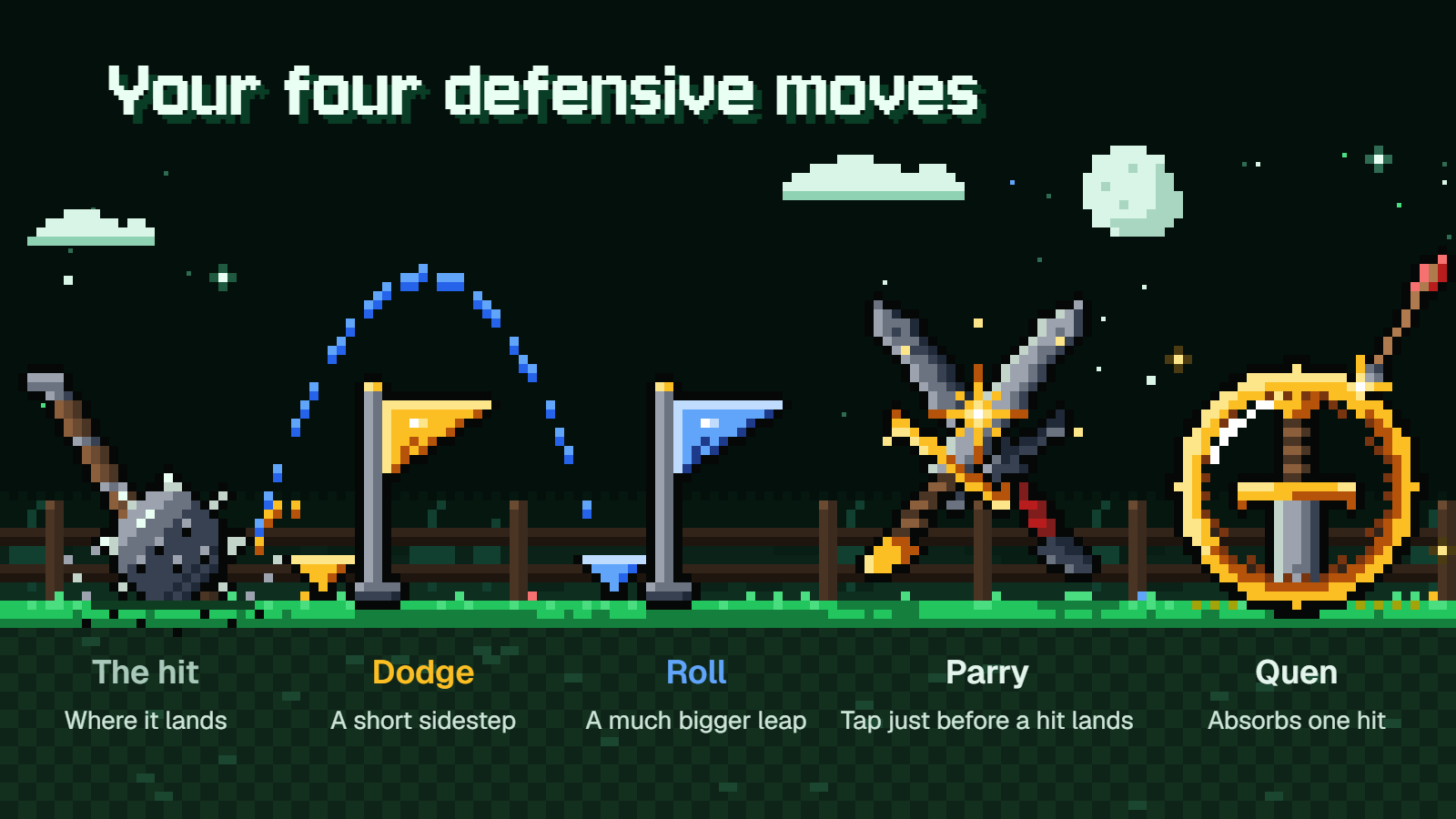
The dodge is a short sidestep. It keeps you right next to the enemy, so you can step out of a swing and hit back straight away. The roll is a much bigger leap that carries you well clear, which is great for getting out of the way of something huge and bad for getting your next attack in.
So against a pack of drowners or a bandit with a sword, sidestep. Save the roll for attacks that cover a lot of ground, like a large monster's charge or slam.
If the dodge felt mushy to you in the first week of Remastered, 5.01 fixed a delay in its response. The same patch stopped sprinting and dodging at the same time from emptying your whole Stamina bar.
Two more moves are handy:
- Getting out of a fight. Hold the dodge button to unlock from your target, then press sprint to run. If the number over an enemy's head is red, this is how you leave.
- Surviving a drop. Roll just before you land and you take far less fall damage. Make it a reflex.
3. Learn to block and parry
Hold the parry button and Geralt blocks. Tap it just before an enemy's attack lands and he parries instead, which can knock the attacker to the ground and leave him wide open.
A good early practice target is any group of bandits. Hold block while you read their rhythm, then start tapping.
4. Keep Quen up
Quen is the protective Sign: a shield that absorbs one hit from nearly every attack in the game. Cast it before a fight starts, and again whenever it pops and you have a quiet second.
This is the one habit I'd push on every new player. A mistimed dodge with Quen active costs you the shield, and the same mistake without it costs you a chunk of health. Returning players should also know that the Exploding Shield skill now reflects damage as of patch 5.01.
5. Learn what the other four Signs are for
- Igni throws fire from a fairly safe distance and can set enemies alight, which takes them out of the fight for a moment.
- Aard knocks an enemy off their feet. Once they're down, a single strike can finish them.
- Yrden shuts down certain monsters' abilities. The Bestiary tells you which monsters it works on.
- Axii messes with minds. In conversations it opens dialogue choices that let you skip a fight, and in combat it can make an enemy fight on your side.
A Sign needs a full Stamina bar, and the bar takes a few seconds to refill. Sprinting drains it too. So if you sprint circles around a pack of wolves, you'll find you can't recast Quen when it breaks. Walk or dodge instead and the bar comes back.
Before the fight: Bestiary, swords, oils and meditation
6. Check the Bestiary, then pick sword, oil and Sign
Geralt carries two swords: silver for monsters and steel for humans. You don't have to guess which one a fight needs, because the enemy's health bar tells you. A silver bar means a creature of magic origin, so draw silver. A red bar is everything else, so draw steel.
Before a contract, open the Bestiary (B on PC) and read the entry for what you're hunting. It lists what the monster is vulnerable to, usually an oil and a Sign, sometimes a bomb. Say a contract points you at a wraith: the entry tells you which oil to put on the silver sword and whether Yrden is worth casting. It takes thirty seconds and changes the fight more than a few extra levels would.
Oils have charges, so they wear off as you land hits and need reapplying. If that sounds tedious, turn on "Automatically Apply Blade Oils". Before 5.01 it only worked if you'd switched it on in the same session, and now it keeps working after you quit and come back.
7. Meditate, and always carry Strong Alcohol
Meditation works almost anywhere outside combat and does three jobs. It recharges Vitality and Stamina, it passes time (handy when a quest wants midnight or a merchant is asleep), and it refills your potions as long as you have Strong Alcohol in your bags. In Remastered it plays as a timelapse of the world going by instead of a menu screen.
Because of the refill, you only brew a potion once. After that, a bottle of Strong Alcohol and a short rest restock it, so grab alcohol whenever you see it.
Potions raise Toxicity when you drink them. Watch the Toxicity bar, and if its skull icon lights up, you're at a dangerous level and should stop drinking. Deep alchemy can wait until you're comfortable. A healing potion and the right oil are plenty for the early hours.
Quest levels and the new skill tree
8. Read the numbers before you pick a fight
Every quest shows a suggested level, and every enemy has a level number to the left of its health bar. The color of that number is the quick read:
- Gray: you're 5 or more levels above it, so it's no threat.
- Green: it's close to your level, a fair fight.
- Red: it's stronger than you.
- Skull: a major threat. Leave.
The main quest will happily walk you into areas full of enemies far above your level. That's why side quests, witcher contracts and notice boards matter: they're where the experience comes from early on. When you ride into a new village, check the board, then do what's near your level before following the story further.
Most quests stay available into the endgame, and the few that don't warn you first, so there's no need to clear every "?" on the map as you go. Remastered also gives untracked quests their own map marker, and you can select one to start tracking it.
9. The skill tree works differently now
Skills sit in a tree, and each one has three ranks. A skill unlocks once you own the skills that lead to it. The old rule, where a skill opened up once you'd spent a set number of skill points, is gone. That's the single biggest reason pre-Remastered builds don't carry over. On top of that, some skills were renamed and the tree was rebalanced, as the Remastered patch notes lay out.
For your early points, look at where a skill leads before you buy it. If there's something further along that you want, check what sits between you and it, and spend toward that. Putting points into things you already do every fight, like casting Quen or swinging fast attacks, is a safer start than chasing something exotic.
Places of Power are worth a detour whenever you spot one. Each boosts one of your Signs and gives you an ability point.
Returning players will find every skill point refunded when an old save loads, because the rebuilt system has nowhere to put your old picks. Treat it as a free respec and take ten minutes to read the tree. If you were confused by the Synergy skill's numbers, 5.01 corrected the bonus values it displays.
Loot, weight and the settings to change on day one
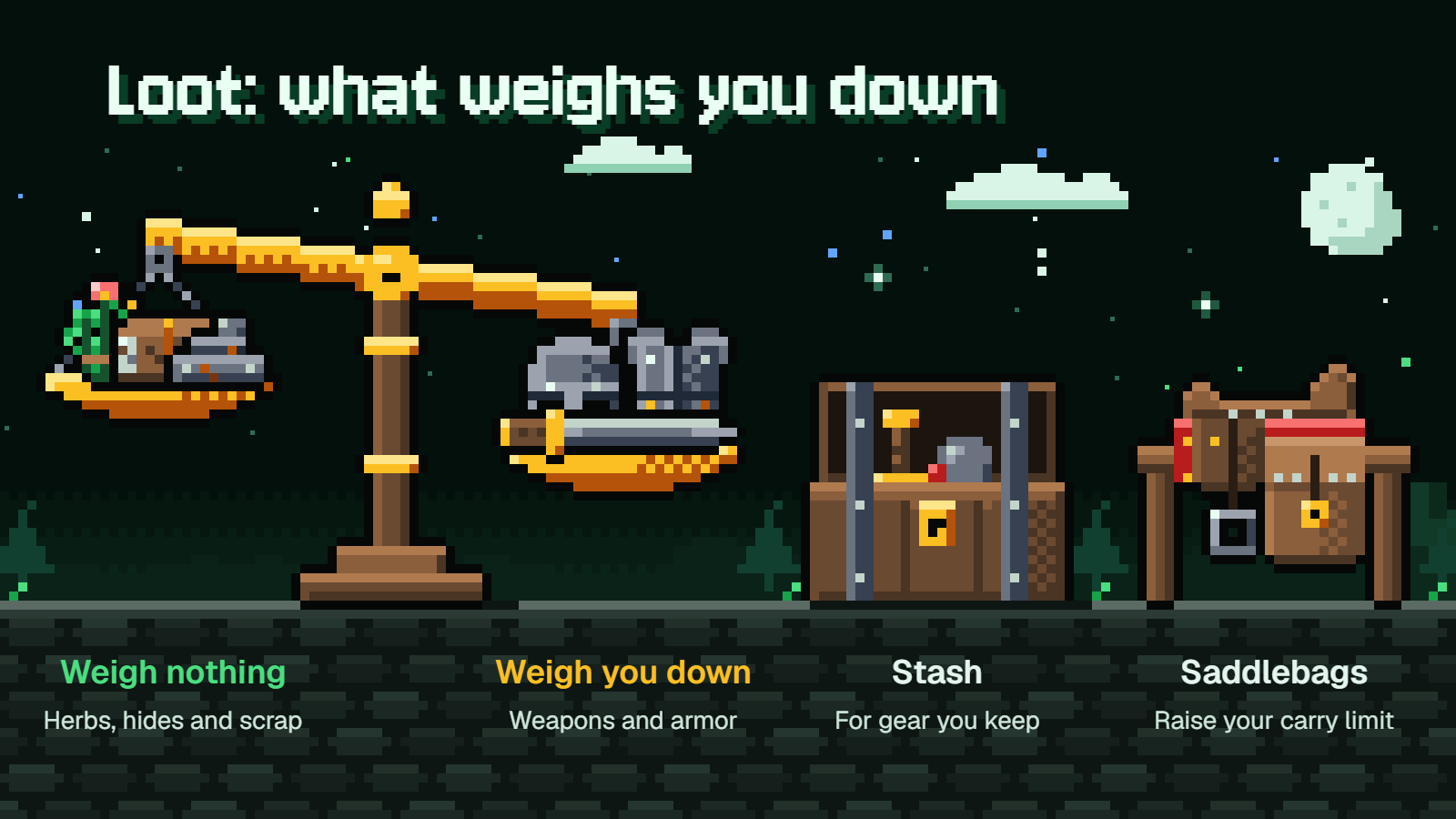
10. What to pick up, sell and stash
Crafting components and alchemy ingredients weigh nothing, so grab every herb, hide and scrap of metal you see. What weighs you down is weapons and armor. Looting six bandit swords is how you end up walking slowly through a swamp.
Here's a simple routine:
- Pick up everything light, and only the heavy gear that's worth selling.
- Buy saddlebags for Roach as early as you can afford them. They raise your carry limit.
- Drop gear you want to keep in a stash. Stash locations are marked on the map.
- Sell books and scrolls once you've read them. The text stays in your Glossary.
- Visit a craftsman and use the repair-all button in the Repair panel to fix everything you're wearing in one go.
Potions and bombs can't be sold, so don't hunt for a buyer. Keep an eye on the Item Durability display too: a slot turning red means that item is severely damaged and due for repair.
Two smaller niceties: in Remastered you can collect loot without getting off Roach, and if you pin a formula or diagram, shops highlight the ingredients you need. In White Orchard, clear the settlement held by ghouls. The settlers come back and bring a grindstone, which buffs your swords.
11. Settings worth flipping right away
- Grouped loot window. In Settings > Gameplay, this gathers nearby loot into one window, so you don't have to click through five corpses one at a time.
- Loot feed. A list of what you picked up runs down the left of the screen. If it's clutter to you, turn it off in the same menu.
- Minimap icons. In Settings > Video > Interface, you can hide herbs, boats and corpses on the minimap. Hiding herbs alone makes it far easier to read.
- Toggle Witcher Sense. By default you hold a button for Witcher Senses. This option, part of the Bard's Ballad set in Accessibility, makes it an on/off toggle, which is kinder on your hand during long tracking sections.
- Automatically Apply Blade Oils. The one from tip 6, for anyone who'd rather not open the inventory before every fight.
Gwent basics for your first matches
12. Enough Gwent to win early, and one quest warning
Gwent is a two-player card game, and the first to win 2 rounds takes the match. You draw 10 cards, can swap up to two, and that hand has to last the entire game. You don't draw fresh cards each round, and that shapes everything else about how you play.
Players take turns playing one card into one of three rows: Close Combat, Ranged Combat or Siege Combat. Highest total strength wins the round. You can pass at any time, but once you pass you're out for the rest of that round.
Because the hand doesn't refill, card count wins games. Picture an opponent dumping strong cards to take round one by a mile. If you pass early and let them have it, you go into round two with more cards than they do. Losing a round on purpose is a normal, good play.
That's also why spy cards are so strong. A spy goes on your opponent's side and adds to their score, but it draws you 2 cards. Giving up a few points for two extra cards is almost always a good trade.
If early opponents feel unfair, Gwent has its own three-level difficulty option, separate from the main game's.
For collectors, pick up the book "A Miraculous Guide to Gwent" from the gwent-playing scholar in the Prologue, or from a merchant near St. Gregory's Bridge in Novigrad's Gildorf district. It shows how many base-game cards you're missing and where to find them.
The warning: the quest "Collect 'Em All" fails if you miss the Milva, Vampire Bruxa and Dandelion cards at the gwent tournament during "A Matter of Life and Death". When that quest comes up, play the tournament and make sure you leave with all three.
FAQ
Why were my skills reset in Remastered?
The skill system was rebuilt into a tree, so old skill choices have no place to go. Your save, level and achievements carry over, and the points are returned for you to spend again. CD PROJEKT RED covers this in its Remastered FAQ.
Can I change difficulty later?
Yes, at any point in a playthrough. The Bard's Ballad options can also be switched on later from the Accessibility section, so you aren't locked in at the start.
Do I have to apply oils by hand?
No. Turn on "Automatically Apply Blade Oils" and the game handles it. Since 5.01 it keeps working after you close the game and come back. You still need to have the right oil crafted, so the Bestiary check is still worth doing.
Should I do side quests before the main story?
Mix them. Follow the main quest until its suggested level climbs above yours or the enemy numbers start turning red, then do nearby contracts and side quests until you've caught up. Since nearly all quests stay open into the endgame, you can leave the rest for later.
Do these tips apply on PS4, Xbox One or Switch 2?
The combat, Bestiary, meditation, loot and Gwent basics apply everywhere. PlayStation 4 and Xbox One don't get Remastered, so the skill tree, Bard's Ballad and the new settings aren't there. Switch 2 has Remastered but isn't on 5.01 yet, so the 5.01 fixes for the dodge, Exploding Shield and the oil setting haven't arrived on it. CD PROJEKT RED says a Switch 2 update is in the works.